11 Jun What the City Hall Discussion Says About Downtown Dallas
By Tanya Ragan
There are moments in the life of a city when several conversations that once seemed separate suddenly become one conversation.
Dallas is in one of those moments right now.
For years, people who live, work, invest, and build in downtown Dallas keep returning to the same issues: connectivity, public safety, walkability, housing, hospitality, convention demand, the future of the southern edge of downtown, and how to connect major public investments with the neighborhoods and properties around them.
Now, because of the City Hall debate, more people are finally paying attention.
That is a good thing.
The future of Dallas City Hall now stands as one of the most emotional civic conversations this city has had in years. Preservationists see an architecturally significant I.M. Pei building Dallas should protect. Others see a massive, underutilized civic site sitting in one of the most important redevelopment corridors in downtown Dallas. Both sides are responding to something real.
But underneath the politics and emotion, there is a larger question Dallas has to answer.
What kind of downtown are we building for the next generation?
That question goes far beyond City Hall. It reaches into the Farmers Market District, the Cedars, the convention center corridor, the land around City Hall, and the parcels that are already positioned to absorb the next wave of growth.
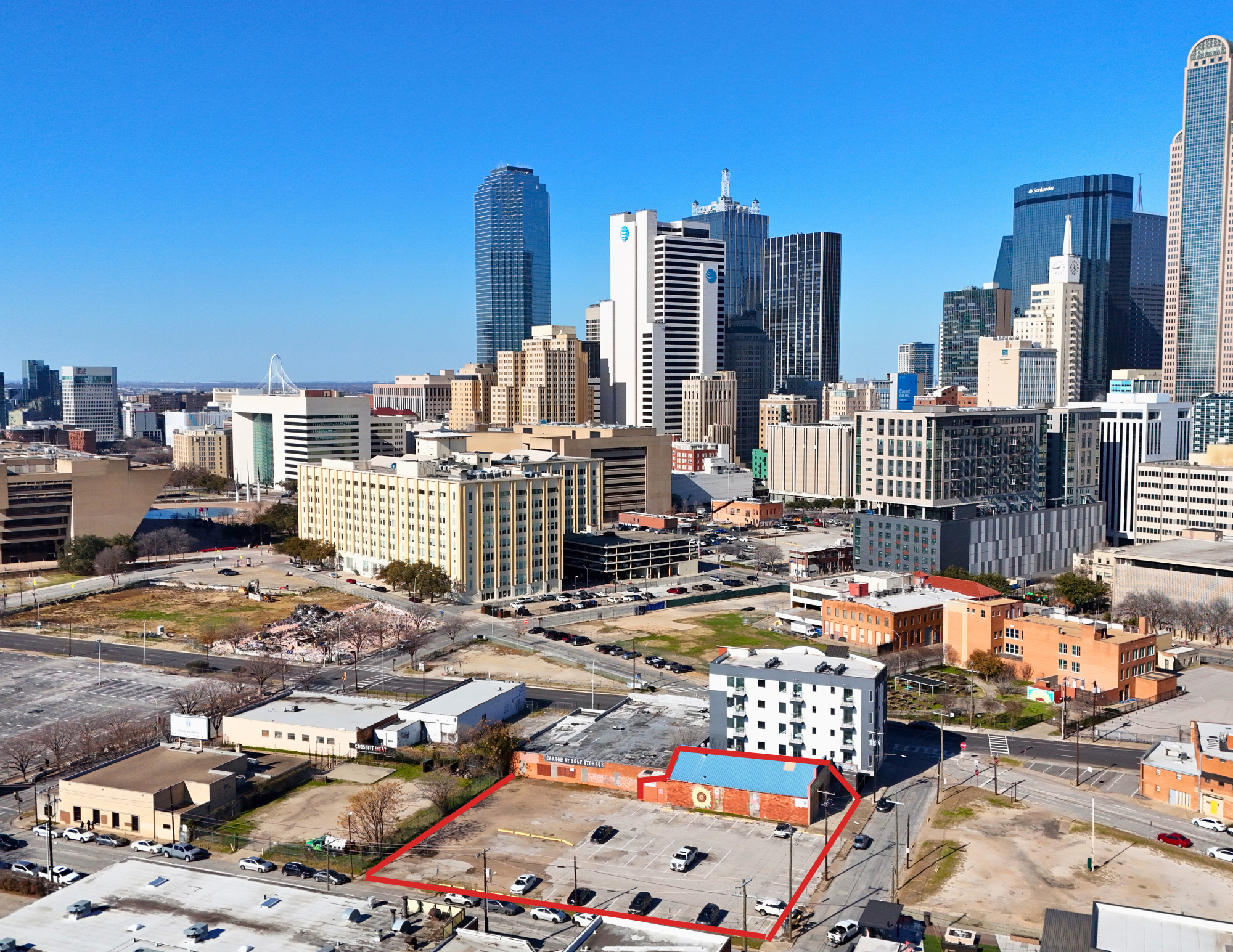
One of those parcels is 1823 Cadiz Street.
Why This Site Matters Now
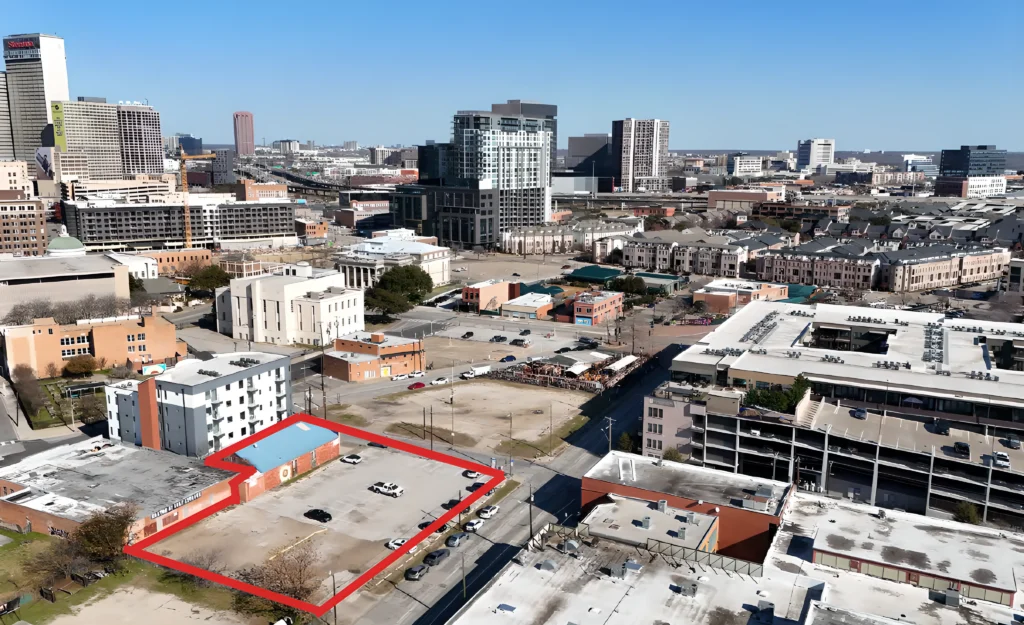
1823 Cadiz is a 0.67-acre site in the Dallas Central Business District. Today, it is surface parking. On paper, that may sound simple. In reality, its location and timing place it at the center of some of downtown Dallas’s most significant growth and investment activity.
The property sits near City Hall, the Farmers Market District, and the Kay Bailey Hutchison Convention Center redevelopment corridor. It is close enough to benefit from the area’s momentum, but its value is not dependent on any single project or outcome.
The strongest downtown opportunities rarely emerge from one headline. They are created when multiple forces begin moving in the same direction. That is what is happening here.
Dallas-Fort Worth continues to attract new residents, corporate relocations, investment, and millions of annual visitors. At the same time, the $3.7 billion convention center redevelopment is funded and moving forward, with the new facility expected to open in 2029.
That combination is reshaping southern downtown.
For years, people talked about the potential of this area. Today, infrastructure investment, tourism, residential demand, corporate growth, and public attention are beginning to align in a much more tangible way.
That is why 1823 Cadiz matters right now.
It is not just a parcel near downtown activity. It is a parcel positioned within it.
The Scarcity Is Not Just Land
People often talk about downtown real estate as if the land itself is the scarce asset.
In some cases, that is true. But in downtown development, land is only part of the story. The real scarcity often sits in the entitlement structure.
A downtown site can look attractive and still be difficult to execute. Height restrictions, parking requirements, use limitations, rezoning timelines, variance requests, irregular geometry, political uncertainty, and infrastructure costs can all change the economics before a project ever begins.
That is where 1823 Cadiz is different.
The site carries PD 357 zoning, which allows multiple uses by right. It has no height cap, no parking minimum, and no variance requirement. It also has a 20:1 floor area ratio, creating approximately 580,000 square feet of theoretical buildable area.
That kind of flexibility is rare.
It gives a future buyer or developer something most downtown sites do not offer: the ability to evaluate multiple development paths without starting from zero.
That matters in a market moving as quickly as Dallas.
The site also sits within the Newpark TIF District and a federal Opportunity Zone. Those incentive layers are not decorative. They affect infrastructure costs, capital strategy, tax treatment, and long-term project economics. In a capital environment where every assumption faces scrutiny, those details matter.
A beautiful rendering is not enough.
A project has to pencil.
What Could Be Built Here
Wildcat Management previously engaged Merriman Anderson Architects to study multiple conceptual development scenarios for 1823 Cadiz. Those studies included residential, hospitality, and mixed-use possibilities.
A residential concept could include more than 250 units with ground-floor retail.
A hospitality concept could include a 200-key hotel with approximately 10,000 square feet of retail.
A mixed-use concept could combine residential and hotel demand in one project, creating multiple revenue drivers tied to the growth of downtown Dallas.
What matters about these concepts is not that one is the only answer. What matters is that the site can support several answers.
That is exactly what a strong downtown development site should do.
One use alone will not shape the future of this part of Dallas. Housing, hospitality, office activity, tourism, restaurants, public spaces, transportation, and the everyday needs of people who actually live and work downtown will shape it together.
That is why flexibility is so valuable.
A site like 1823 Cadiz does not have to wait for the market to become something else. It already sits in the path of several demand drivers that are active now and likely to strengthen as the convention center expansion moves forward.
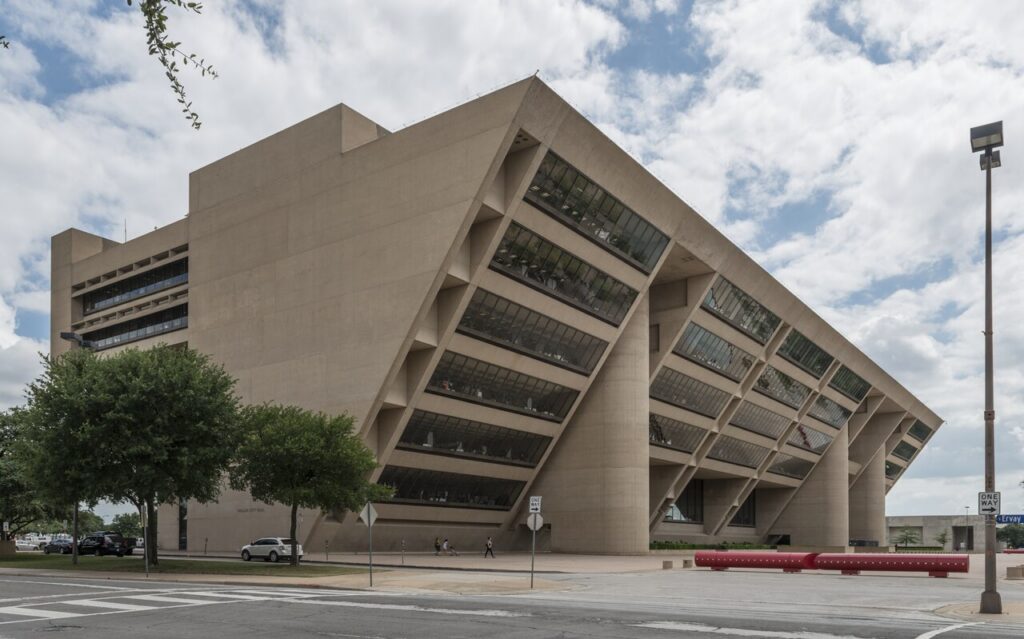
The City Hall Debate Changed the Conversation
The City Hall debate forces Dallas to look more closely at the southern edge of downtown.
That needed to happen.
For too long, this part of downtown sat adjacent to the core rather than fully integrated into it. People who live and work here have spent years talking about the same issues: how to create safer streets, stronger pedestrian connections, better activation, more residential density, more retail, and better links between the Farmers Market, the convention center, City Hall, the Cedars, and the rest of downtown.
Those are not abstract planning questions.
They affect whether people walk or drive. Whether visitors stay or leave. Whether restaurants survive. Whether developers invest. Whether residents feel like they live in a connected neighborhood or on the edge of one.
That is why the City Hall discussion matters beyond the building itself.
If City Hall remains and Dallas rehabilitates it, the city still has to solve the larger issues around activation, safety, access, and connectivity.
If Dallas eventually redevelops City Hall, it will have to decide what kind of civic and urban fabric replaces it.
Either way, the conversation has moved. The city is no longer only debating a building. It is debating the future structure of downtown Dallas.
And 1823 Cadiz sits directly inside that conversation.
I Have Seen This Pattern Before
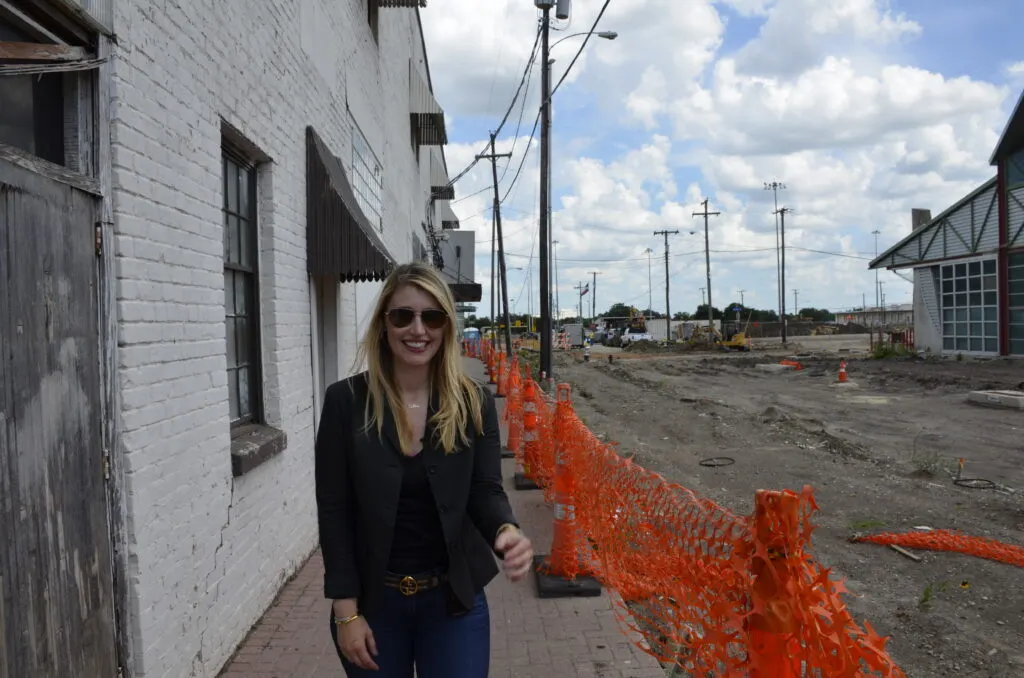
After nearly twenty years investing in downtown Dallas, I have learned that transformation usually begins long before the broader market recognizes it.
That was true in the Farmers Market District, when the area still needed organization, advocacy, and a stronger voice. It was true with historic buildings others overlooked, including properties that required patience, preservation, and a belief that downtown still had another chapter ahead of it. It was true when we relocated a building brick by brick and when we restored properties others had already written off.
Those experiences shape how I see 1823 Cadiz.
To me, this is not simply a parking lot waiting for a future use. It is a site sitting inside a convergence of timing, location, zoning, public investment, and city momentum. The convention center expansion, the Farmers Market, the Cedars, City Hall, residential demand, corporate growth, visitor traffic, and the limited supply of flexible downtown development sites are all part of the same larger story.
By the time everyone agrees a site is obvious, the best window has usually already passed.
That is what makes this moment important.
The Window Is Real
Dallas has reached a point where the conversation about downtown can no longer be separated into small, disconnected pieces.
The future of City Hall affects the land around it. The convention center expansion will influence hotel demand, restaurant activity, pedestrian movement, and investor interest. The Farmers Market’s residential success has already changed how people understand the southern edge of downtown. Corporate relocations, population growth, tourism, and capital migration are adding pressure across housing, hospitality, office, retail, and entertainment.
That is the bigger picture.
1823 Cadiz matters because it sits where those forces meet. Its location, zoning, incentive layers, by-right development flexibility, and proximity to public investment create a combination that is increasingly difficult to find in downtown Dallas.
When a city is growing slowly, people have time to debate every move. When a city is growing as quickly as Dallas, the market often moves before the public conversation catches up.
That is what I think is happening now.
Dallas is still in the window where decisions made today can shape the city for generations. But that window will not stay open forever.
The question is not whether downtown Dallas is changing.
It already is.
The question is whether we are paying attention to the sites, corridors, and decisions that will define what comes next.
1823 Cadiz is one of those sites.
What gets built there will not just fill a piece of land.
It will become part of the next chapter of downtown Dallas.
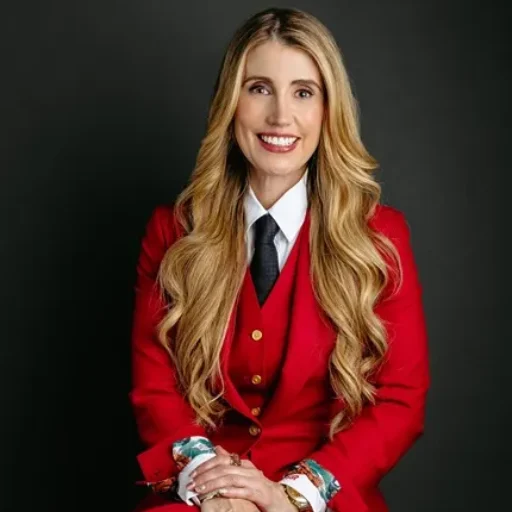
Founder and President of Wildcat Management, Tanya Ragan is a Dallas real estate developer, investor, and entrepreneur with twenty years developing some of North Texas’s most recognized neighborhoods. 2024 Texas Icon. Top 100 CRE Influencer. Co-author of Blaze Your Own Trail. She started in fashion, detoured through oil fields, built half of downtown Dallas, and has opinions about all three.