
29 Apr The Last Blank Canvas in Downtown Dallas
By Tanya Ragan
A three-quarter-acre site in the heart of the CBD — and what it reveals about the moment Dallas is in right now.
I recently stood at the corner of Cadiz Street and did something I rarely do anymore.
I stopped.
In twenty years of working in downtown Dallas, I have learned to keep moving. This city rewards the people who see around corners, not the ones who linger at them.
But standing at this intersection — watching the foot traffic, the rideshares stacking up at the light, the new Dallas Convention Center six blocks away, the cranes visible on two sides — I found myself doing the math in my head.
Not the financial math.
The bigger math.
The math of what a city looks like when it has decided, at scale, that a single corridor is the future.
This piece is about that decision.
And about one parcel that sits at the center of it.
Dallas has crossed a threshold most American cities never reach.
I say this having watched it happen from the inside, over two decades, one block at a time. There was a Dallas that people in New York and Los Angeles saw as a regional market — big by Texas standards, not yet serious on the global stage.
That Dallas is gone.
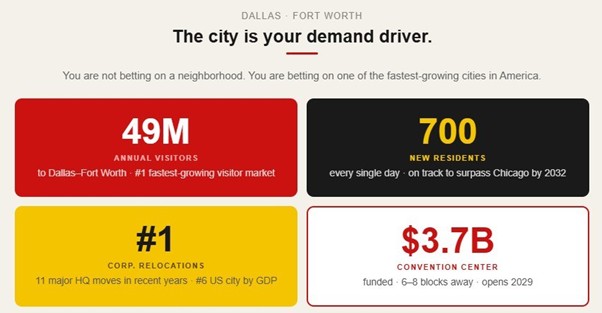
The city now adds more than 700 new residents to the DFW area every single day. Forty-nine million people visited last year, making it the fastest-growing visitor market in the country. Eleven major corporate headquarters have relocated here in recent years.
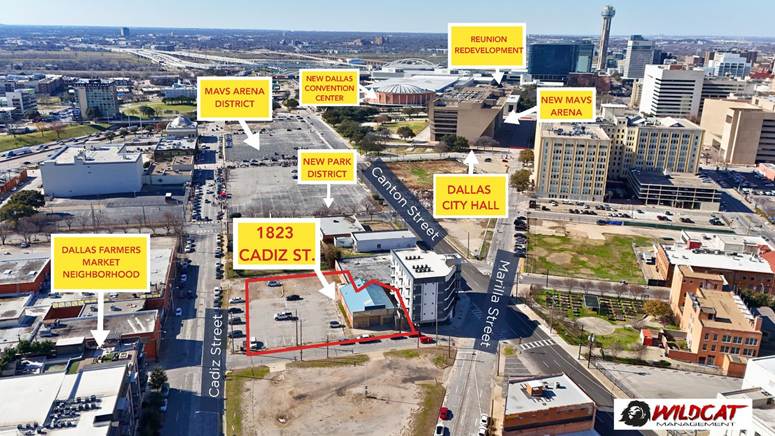
And the public investment flowing into the downtown core — the 3.7 billion Convention Center redevelopment, the proposed Mavericks arena, the Reunion and Newpark corridors — represents a commitment of capital that repositions the entire southern edge of downtown in a way that simply was not on most investors’ maps five years ago.
This is not a market you study from the outside and then move on. When a city of this size crosses this kind of threshold, the window for early positioning is real — and it closes.
The scarcity is not the land.
It is the entitlements.
When most people think about why downtown development is hard, they think about financing or construction costs. Those matter. But the thing that kills more deals than anything else — the thing that adds eighteen months and millions of dollars to projects before a shovel ever touches ground — is entitlement risk.
Zoning hearings. Landmark boards. Height restrictions that limit how much you can actually build. Parking minimums that eat your buildable area before you’ve drawn a single floor plan.
Each of those constraints is a cost. Collectively, they are often the reason a deal does not pencil.
The rarest thing in a downtown CBD is a parcel where all of those constraints have already been removed — where the city has essentially said: build what the market wants, as dense as you want, as tall as makes sense.
That designation exists in Dallas. It is called PD 357.
And 1823 Cadiz Street has it.
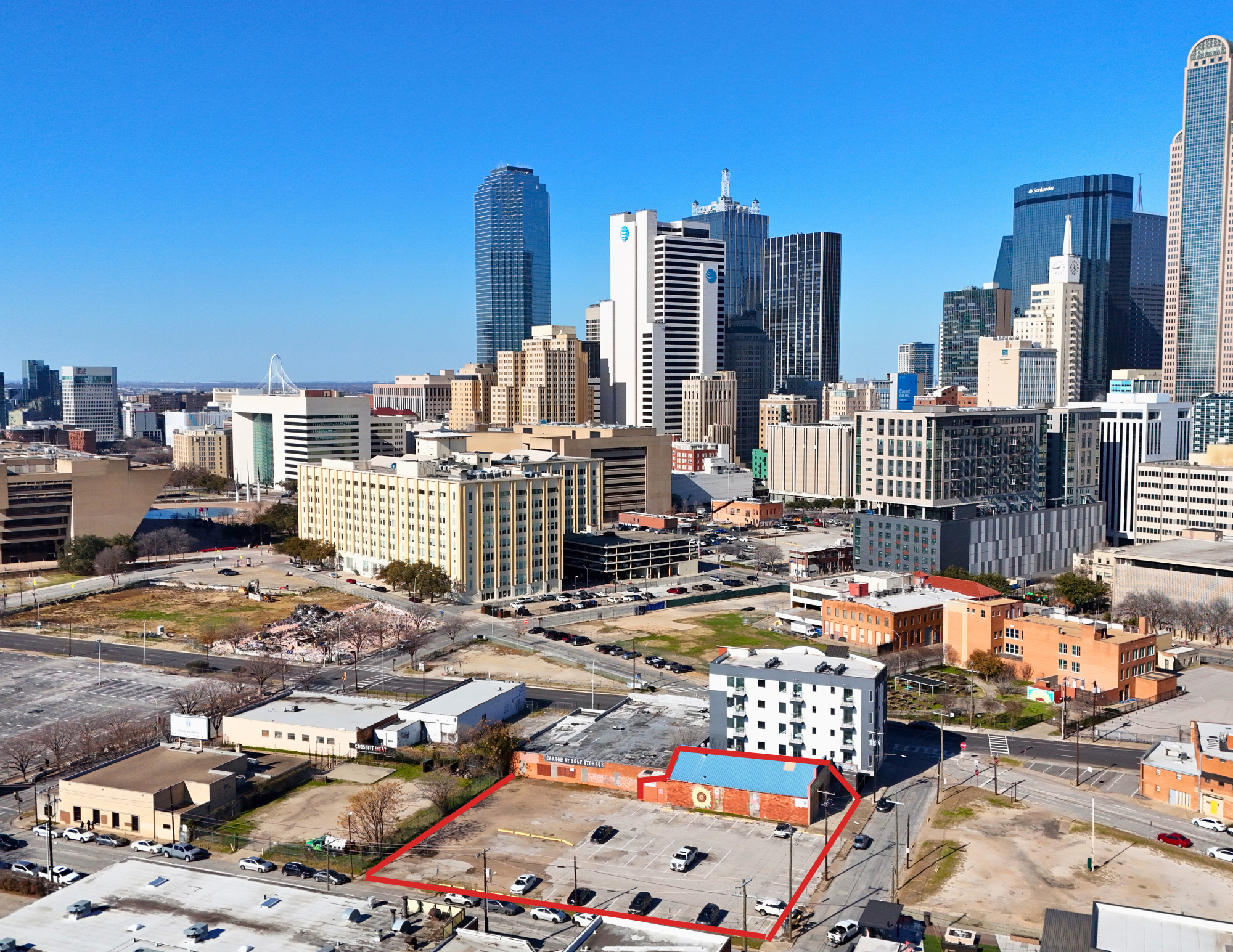
1823 Cadiz Street is approximately 0.67 acres — just under three-quarters of an acre — in the Dallas Central Business District. It is a surface parking lot today. Positioned directly between the Farmers Market District, City Hall, and the emerging Arena District.
The footprint is nearly square. That detail matters more than it sounds. For any developer planning a structured parking podium with residential or hotel above, a square layout dramatically improves structural efficiency and reduces per-unit construction cost. Irregular shapes create dead corners that add up to millions of dollars across a project.
This site does not have that problem.
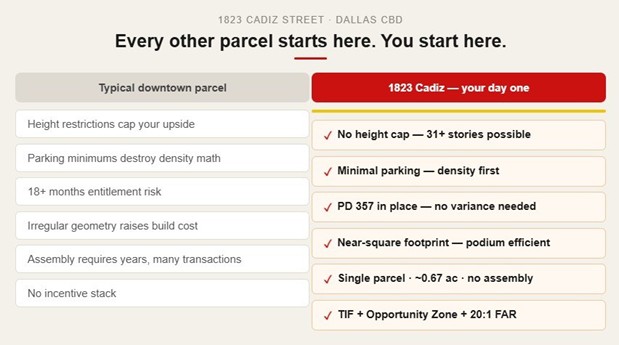
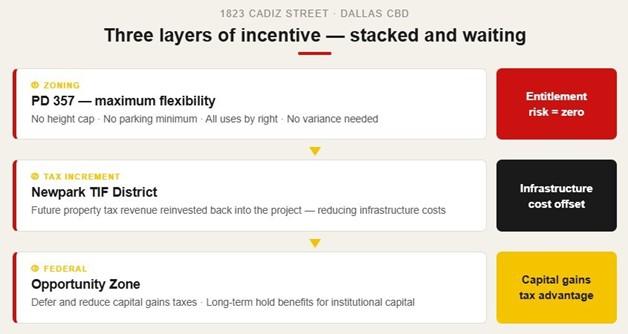
Under PD 357, there is no height cap. No minimum parking requirement. A 20:1 floor area ratio.
Run that math: 20 times 29,000 square feet is 580,000 square feet of theoretical buildable area — on a single parcel, in the Dallas CBD, with no height limit. That is not a footnote. That is the thesis.
There are also three layers of financial incentive in place. The Newpark TIF District, which reinvests future property tax revenue back into the project. Federal Opportunity Zone status, which allows investors to defer and potentially reduce capital gains taxes. And the PD 357 zoning itself — which eliminates the entitlement costs and risks that bury most comparable deals before they start.
When I look at a site for development, I ask what the city needs here.
Not just what will pencil. What is actually missing. What will the neighborhood want in ten years that it does not have today.
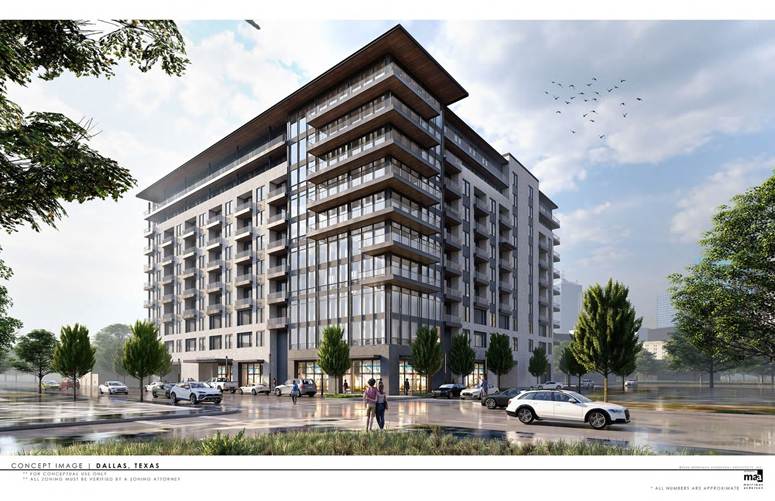
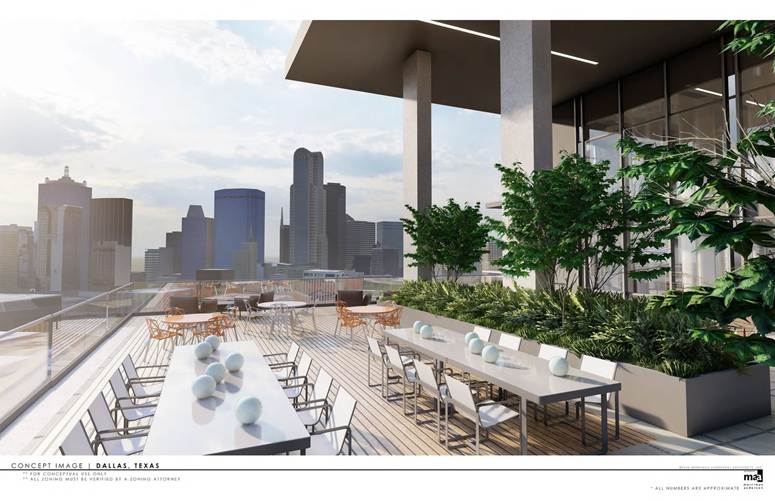
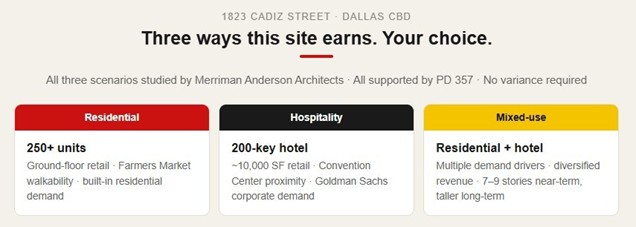
Merriman Anderson Architects completed a study of three scenarios, all of which are supported under current zoning with no variance required.
A 250-plus unit residential tower with ground-floor retail.
A 200-key hotel with approximately 10,000 square feet of retail.
A combined residential and hospitality program.
Under current market conditions, seven to nine stories is the most financially feasible range. But the absence of a height cap means that, as financing costs normalize — and as the Convention Center opens in 2029 and the arena follows in 2030 or 2031 — the same site can support a significantly taller program.
The land does not expire. The optionality is permanent.
I have watched developers miss moments in this city.
Not because they did not recognize the opportunity — they usually did, eventually — but because they waited until the evidence was undeniable, at which point the price had already moved.
The developers who positioned in the Farmers Market District before the infrastructure arrived.
The ones who bought into the Design District before it became a destination.
The ones who moved on the West End before the preservation wave made it obvious.
The land assemblage required to control nearly half a city block in an active CBD — with parking resolved, frontage optimized, and zoning already in place — typically takes years and multiple transactions. This site delivers all of that in a single acquisition.
When parcels like this are gone from a market like Dallas, they do not come back. The city builds over them.
What gets built on this corner will be part of Dallas’s skyline for a hundred years. That is not a real estate decision. It is a legacy decision.
I would love to walk this site with you. Come stand on this corner. Look at the cranes. Look at what this city is becoming. Then tell me you do not feel the moment.

Founder and President of Wildcat Management, Tanya Ragan is a Dallas real estate developer, investor, and entrepreneur with twenty years developing some of North Texas’s most recognized neighborhoods. 2024 Texas Icon. Top 100 CRE Influencer. Co-author of Blaze Your Own Trail. She started in fashion, detoured through oil fields, built half of downtown Dallas, and has opinions about all three.