26 May What the FIFA World Cup Is Actually Doing for Dallas Real Estate (And Why It Matters Right Now)
By Tanya Ragan
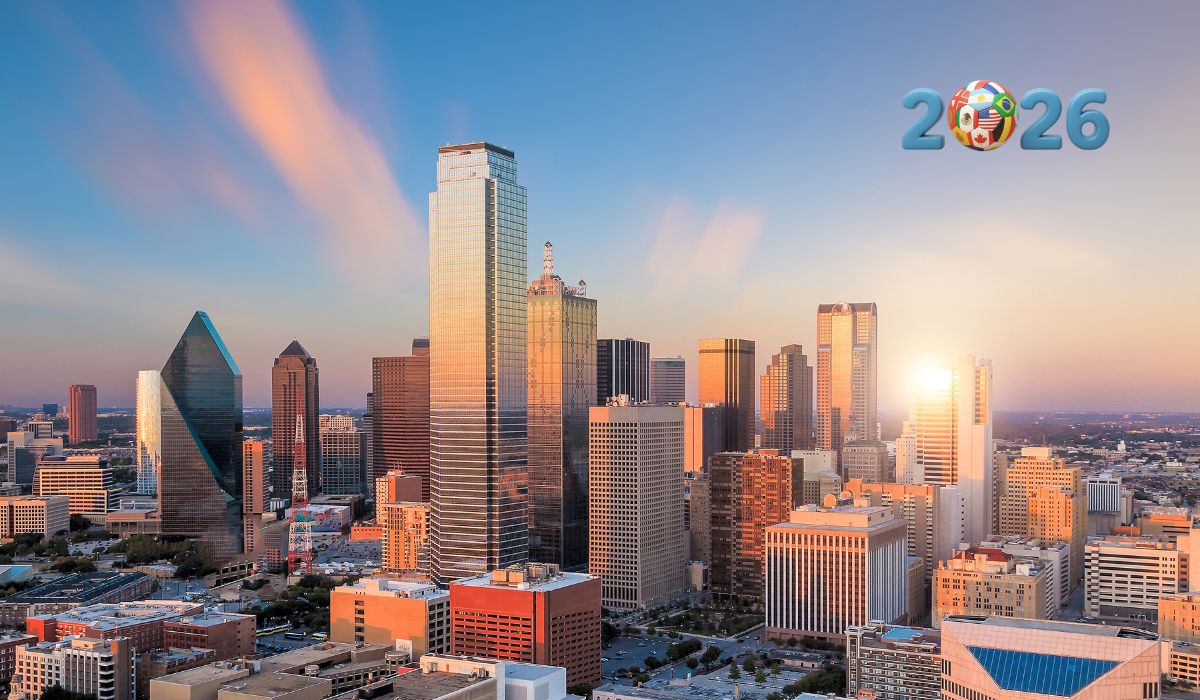
I have been working in downtown Dallas long enough to know the difference between a moment that feels big and a moment that actually is. The FIFA World Cup coming to Dallas this summer is the second kind.
People talk about the World Cup in terms of hotel bookings and restaurant revenue. That is real. But what is not getting enough attention is what this event does to the profile of Dallas as a city for international capital. That conversation is the one I want to have.
Dallas Is Not Just Hosting Matches. It Is Hosting the World’s Media.
Dallas is serving as the International Broadcast Center for the 2026 FIFA World Cup. That means thousands of international journalists, producers, and media teams are physically based in this city from June through August. These are not tourists looking for a good time. These are professionals with global platforms, covering one of the most watched events in the history of sports, filing stories that reach billions of people.
Their backdrop is Dallas. Their off-hours exploration is downtown Dallas. And what they see, what they write about, what they photograph and broadcast beyond soccer, shapes the perception of this city for investors, developers, and decision-makers in markets that Dallas has historically struggled to reach.
I have spent years making the case for downtown Dallas to people who think of it as a secondary market. The World Cup makes that case for me, and it does it at a scale I could never afford on my own.
What International Buyers Are Actually Looking For in Dallas
Most international capital coming into DFW is chasing the new corridors in North Dallas, and the numbers back that up. But there is a different buyer, one who is drawn to authenticity, history, and the kind of urban core that takes decades to build, and downtown Dallas has exactly what that buyer is looking for.
What I hear from that buyer, consistently, is that they are not looking for the newest building in the most expensive corridor. They are looking for assets with history, flexibility, and a city with structural tailwinds that make their investment durable.
Dallas delivers all three, and right now it is delivering them in a way that is visible to the entire world.
The city is in the middle of a $3.7 billion convention center redevelopment. Demolition is physically underway. The proposed arena district near City Hall is an active civic conversation. More than 700 new residents arrive in the DFW area every single day. Eleven major corporate headquarters have relocated to this region in recent years. Goldman Sachs, Caterpillar, and others have added thousands of jobs here since 2022.
These are not talking points. They are the structural conditions that make a real estate investment in downtown Dallas something other than a bet. They make it a position.
Why Historic Properties Are the Right Entry Point
International capital has a long history of valuing architectural authenticity in ways that American institutional investors sometimes overlook. A building with a documented history, preserved character, and adaptive reuse potential is not a liability in those markets. It is a differentiator.
Downtown Dallas has very few of these assets left. The ones that remain are the ones that someone fought to preserve through decades when the easier path was demolition.
I know that fight. When I acquired the Purse Building at 601 Elm Street in 2017, it had been sitting vacant for nearly thirty years. The easier path was obvious. Instead, we stripped it back to its original pine floors, timber beams, and brick walls, and we uncovered something that new construction cannot replicate: a building that has witnessed more than a century of this city’s story. It served as the FBI’s command center the day President Kennedy was shot in nearby Dealey Plaza. It is listed on the National Register of Historic Places. It qualifies for federal, state, and local historic tax credits that can offset up to 45 percent of rehabilitation costs. And it sits one block from a DART rail station, steps from the new convention center footprint, and directly on the corridor that international visitors will walk this summer.
That combination does not come together twice.
The Window Is Short
The World Cup matches in Dallas run from mid-June through mid-July, but the International Broadcast Center operation extends further. The concentration of global media, international visitors, and high-net-worth travelers in this city peaks this summer and does not repeat.
For a property like the Purse Building, that window matters. Visibility for an acquisition opportunity is not just about the right buyer. It is about the right buyer seeing the right city at the right moment. When the backdrop is a city that commands global attention, the asset inside that city reads differently than it does in a quiet news cycle.
This is not a theory. After the 2014 World Cup in Brazil, international real estate inquiries in host cities spiked and sustained for months, driven by media exposure that turned casual visitors into active investors. Miami has built an entire international buyer pipeline around its visibility at major global events. Dallas now has that same platform, for the first time, at this scale.
What I Am Watching This Summer
I am watching which international markets send the most inquiries. I am watching how the media covers downtown specifically, not just the stadium in Arlington. I am watching whether the convention center progress becomes part of the World Cup story or stays a local one.
And I am watching whether the people who walk past the Purse Building this summer, who look up at a 120-year-old red brick building directly across from one of the most documented sites in American history, start asking the question I have been waiting years for someone to ask: who owns that, and what comes next?
If that is you, or someone you know, the answer is Wildcat Management. And I would be glad to have that conversation.
Tanya Ragan is the President of Wildcat Management, a Dallas-based real estate investment and development firm specializing in urban revitalization and adaptive reuse. She is a four-time GlobeSt Women of Influence honoree and the 2024 Texas ICON by REDnews. Learn more about the Purse Building at pursebuildingdallas.com.
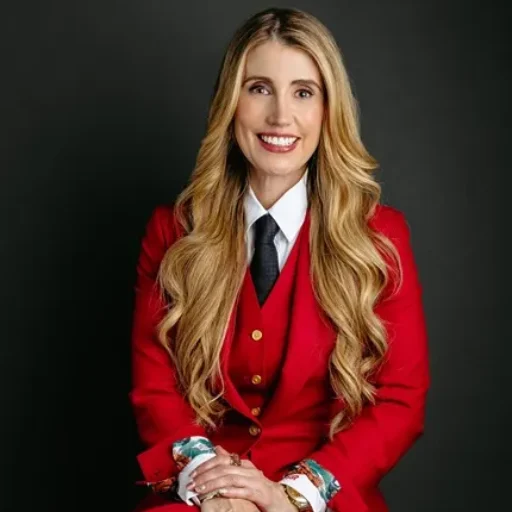
Founder and President of Wildcat Management, Tanya Ragan is a Dallas real estate developer, investor, and entrepreneur with twenty years developing some of North Texas’s most recognized neighborhoods. 2024 Texas Icon. Top 100 CRE Influencer. Co-author of Blaze Your Own Trail. She started in fashion, detoured through oil fields, built half of downtown Dallas, and has opinions about all three.